Monday, April 1, 2019

LAD/Blog #39: Brown v Board of Education

Image result for norman rockwell linda brown

Image result for linda brown
Linda Brown


The 1954 Supreme Court case, Brown v Board of Education, the Supreme Court ruled that segregating schools was unconstitutional. This overturned their original ruling in 1896 in Plessy v Ferguson, which set the precedent for "separate but equal" in segregating public places. Oliver Brown filed a class-action suit against the Board of Education of Topeka after his daughter, Linda Brown, was denied entry into an all-white elementary school. The case went before the U.S. District Court in Kansas that agreed the segregation violated the Fourteenth Amendment, but still upheld the "separate but equal" ruling.
Image result for little rock nine
The Little Rock Nine were another group of
African Americans that were integrated into a white
school and had the National Guard as protection.

Friday, March 22, 2019

LAD/Blog #38: Truman Doctrine

Image result for truman doctrine


        Truman addresses the concern of aiding Greece in their reconstruction. The leadership of Greece had continuously been undermined by communistic men, and they were asking for American economic resources and advisors to oversee the reconstruction progress. Before, both Britain and the United States had been supporting Greece, but not to a great extent. Britain could no longer provide support, leaving the responsibility to the United States. Truman went on to explain that the American foreign policy was to support the free European nations in need, otherwise they might all fall and leave the world, again, in disarray.
Related image
The Marshall Plan, passed in 1948, was another financial
aid program to provide European nations with
a way to pull themselves economically out of the 
pit they put themselves in during WWII.

Sunday, March 10, 2019

LAD/Blog #37: FDR's Executive Order 9066

Image result for executive order 9066
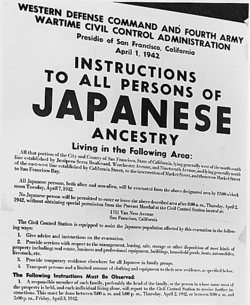
Executive Order 9066

           FDR issued his Executive Order 9066 as a security measure for the United States after the bombing of Pearl Harbor. The order basically gave the Secretary of War and Military Commanders the right to create military areas and relocate Japanese-Americans to them. In these areas, people were excluded and the commanders could impose their own restrictions. Plus, the President asked for the support of several Federal agencies, which was seen in "Home is a Horse Stall", where Sox was put into an internment camp created by the Federal government. Considering how bad the bombing was, I understand FDR's need for national security. I also believe that the internment camps took it too far by excluding the Japanese-Americans, most of whom had been born in the United States and were American citizens.
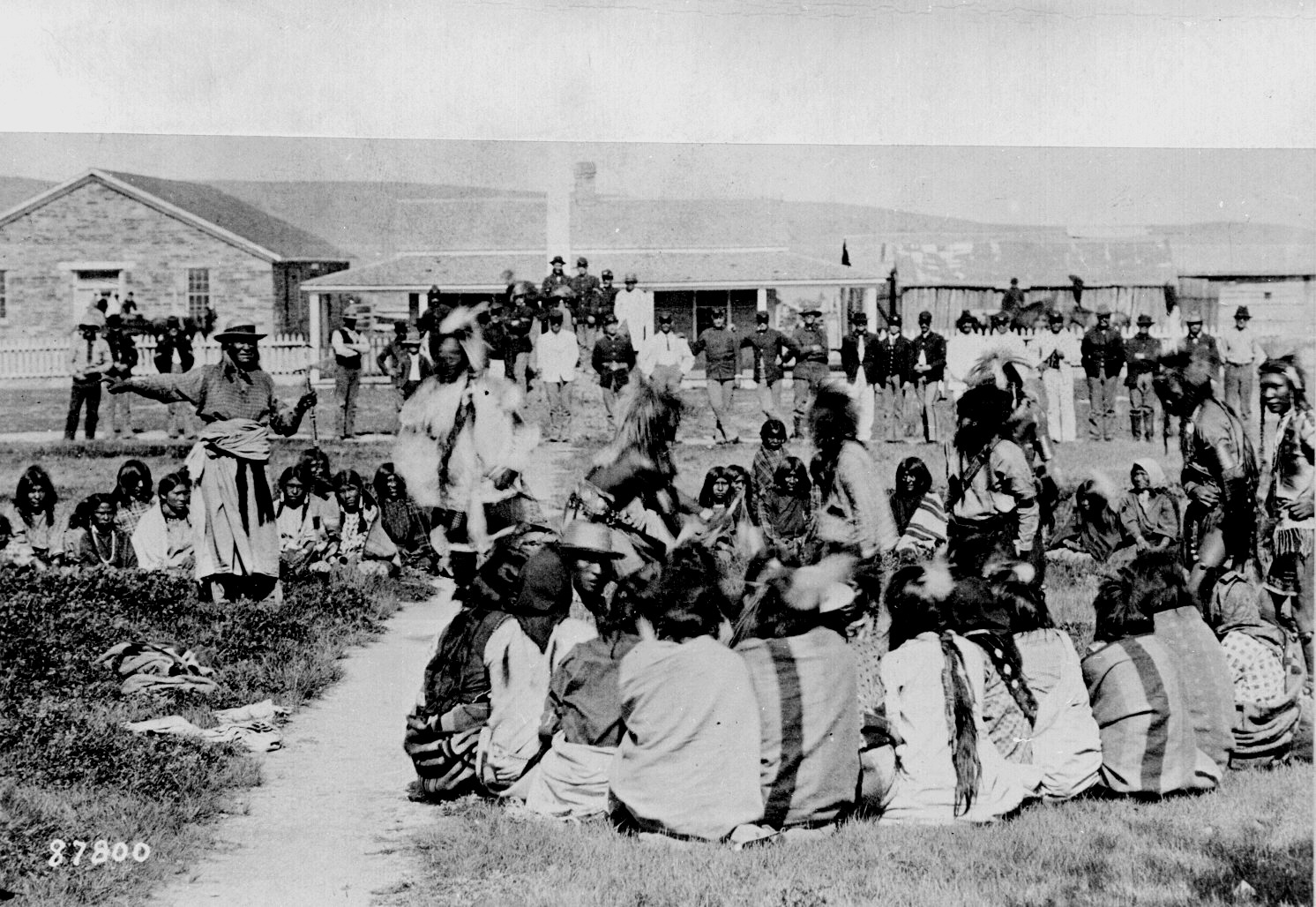
Image result for dawes act
The Dawes Act of 1887 permitted the
selling of Native American land, 
while the tribes were being pushed
into reservations and excluded from
the decisions.

Thursday, March 7, 2019

LAD/Blog #36: FDR's Declaration of War

Image result for declaration of war wwii
US declaration of war

        On December 8, 1941, President Roosevelt declared war on Japan. The bombing of Pearl Harbor, "a date that will live in infamy" pushed the United States, once again, into a European war. FDR explained to the nation that he was no longer able to remain neutral in this fight and had to defend his country against the now hostile Japan. In the vote to declare war, Jeanette Rankin was the only one to vote against it, earning her the nickname "Japanette" Rankin and causing the rest of Congress to look down upon her.
Image result for declaration of war wwi
This was similar to the United States declaring 
war in the Great War because like defending 
themselves against Japan, the US was defending
against Germany.

Wednesday, March 6, 2019

LAD/Blog #35: Home was a Horse Stall

Related image
Japanese Internment Camp

            Sox and her family were just one of the many innocent families pushed into internment camps by the American government. The hostility towards Japanese-Americans was absolutely unacceptable, even though thousands had been lost in the bombing of Pearl Harbor. This was just another way for racist Americans to express their feelings in the name of patriotism. Store owners began to turn away Japanese customers, leaving them without food or clothing and violence sprang up once again. FDR officially made it clear to Japanese-Americans that they were unwelcome in the United States by issuing Executive Order 9066 and the Civilian Exclusion Order No. 27. Although it was very obvious that FDR was trying to keep American citizens from retaliating, but the Japanese internment camps could even be compared to the concentration camps in Nazi Germany. Sox and her family had to stay in an extremely small horse stall with nothing but straw pallets to sleep on. When they were moved once again, the barracks under construction made Sox very happy. The barracks were sadly such a blessing to these Japanese-Americans, who had everything taken away from them. These Japanese-Americans faced so much wrong after Pearl Harbor, all of which was not their fault. I feel extremely sad for these people who lost most of their possessions and the pieces they brought from home to remind them of their native culture.
Related image
Similar to the internment camps, Native Americans
were forced onto reservations where they were
forcibly controlled and assimilated.

Sunday, March 3, 2019

LAD/Blog #34: FDR's First Inaugural

Image result for fdr's first inaugural address
FDR's First Inaugural

            On March 4th, 1933, President Franklin Delano Roosevelt delivered his first inaugural address to the American people. He began the speech by telling the citizens that the United States was facing some harsh conditions, but he would do his best to rise and meet those head on. FDR asked for their support through the dark times, saying that "the only thing we have to fear, is fear itself". FDR outlined his plan to treat the Great Depression after the stock market crash as war, and mobilize the American Homefront to increase productivity and lower unemployment. He then mentions his good neighbor policy, changing the old one, to respect the rights and agreements of other countries. Concluding his speech, he asked for the public to trust him, as he was going to assume a lot of power in the coming years.
Related image
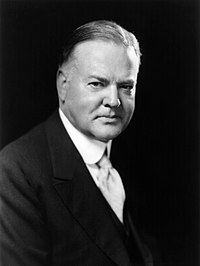
President Herbert Hoover was a lot
like FDR in that he tried to help
the United States during the Great Depression.
Unfortunately, for him, it was "too little, too late".

Saturday, March 2, 2019

LAD/Blog #33: Kellogg-Briand Peace Pact

Image result for kellogg briand peace pact
Kellogg-Briand Peace Pact signing

             This pact, also known as the Pact of Paris, was meant to outlaw war to prevent another global conflict. European nations and the United States realized that the Treaty of Versailles was not working in that prevention, so they tried another route to keep the peace. The pact is named after Artiste Briand, the man who proposed the treaty to keep war from between America and France, and Secretary of State Frank B. Kellogg. In total, after several countries settled their debates on whether to ratify it, the pact was signed by sixty-two nations. To enforce this pact, the League of Nations would have to be strong in their willingness to break up and prevent fights from between countries. Their first test came with the Mukden Incident, where Japan invaded Manchuria, but nobody came to China's aid. It seemed as though the path towards another global conflict was inevitable.
Related image
Wilson's Fourteen Points of Peace, although
they mostly not used, outlined a plan
to keep the peace between countries
and prevent another world war.

Saturday, February 9, 2019

LAD/Blog #32: Wilson's 14 Points of Peace

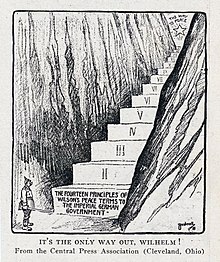
Image result for wilson's 14 points of peace political cartoon


To President Wilson, these points may have seemed realistic, as many of them are, but most could have only happened in his wildest dreams. He wanted to treat the losing side fairly, so as to prevent another war. Unfortunately, the Allies had different plans and wanted Germany to pay for the long years of suffering they had put them through. They tried their best to restore Europe and its countries back to the way they were, except Germany. Despite Wilson's insistence to go easy on them, the Treaty of Versailles took away most freedoms that Germans enjoyed and sank them deeply in debt. The thing that really stuck to the guidelines of Wilson's 14 Points of Peace was the 14th point, forming a general association of nations to keep the peace throughout the world. Thus, the League of Nations was born. The 14 Points of Peace may have seemed like the best way to restore Europe at the time, but most points were idealistic.
Image result for peace treaty ww2
At the end of World War II, the Axis powers
signed peace treaties with the Allies which were
as harsh, if not more than the treaties signed after
the Great War.

Wednesday, February 6, 2019

LAD/Blog #31: Schenck v United States

Image result for schenck pamphlet
Pamphlet telling the public
to resist the draft.

Charles Schenck and Elizabeth Baer distributed leaflets telling people to peacefully resist the draft, since they believed it violated the Thirteenth Amendment. Both Schenck and Baer were convicted of violating the Espionage Act of 1917 and appealed to the court by saying that the statute violated the First Amendment. The court upheld that the First Amendment was not actually violated, and defined, for the first time, the "clear and present danger" doctrine. Justice Oliver Wendall Holmes compared it to shouting "Fire!" in a crowded theatre, which would cause massive amounts of panic and destruction.

Image result for peter zenger
Peter Zenger also went on trial for speaking out 
against the government. In this case, he was 
acquitted and became the defining factor
in free speech.


Sunday, January 27, 2019

LAD/ Blog #30: Wilson's First Inaugural

Related image
Wilson's First Inaugural Address

Woodrow Wilson first acknowledged that people had changed their perspectives on the nation and had a strong desire to rectify the wrong-doing that had been occurring for some time. He believed that the government was powerful and could handle the change that it needed to undergo. He wanted to send the message that the government was able to go against big businesses, but it needed the support of the people to do so. Wilson also states that the government, while the nation prospered under a great economy, had forgotten about its people and the environment. He thought that it was time for a change in perspective and a correction of the wrong-doings, specifically the harmful tariffs, food quality, labor laws, and lack of environmental preservation. These progressive beliefs were his idea of the law's duty to protect the nation it served.
Image result for teddy roosevelt trust buster
Teddy Roosevelt was another president
who regulated big businesses and was nicknamed
the "Trustbuster".

LAD/Blog #29: Clayton Anti-Trust Act

Image result for clayton antitrust act
Clayton Anti-Trust Act

The Clayton Anti-Trust Act was an addition to the Sherman Anti-Trust Act of 1890. It was meant to increase the effectiveness of the Sherman Anti-Trust Act, which had the greater impact out of the two. The Clayton Anti-Trust Act focused more on the price discrimination, price fixing, and unfair business practices still in use during the Progressive Era. Enforced by the Federal Trade Commission and the Antitrust division of the Department of Justice, the Clayton Anti-Trust Act took down price discrimination and big business merging, which destroyed competition. It stated that discrepancies in prices could only occur due to the quality of the products and prohibited people from selling at lower prices when their intent was to create a monopoly. The Sherman Anti-Trust Act and the Clayton Anti-Trust Act worked well together, one banning monopolies, and the other prohibiting their formation.

Related image
The Celler-Kefauver Act of 1950 prohibited
big businesses from buying up their competition's
assets, which was a loophole they found through
the Clayton Anti-Trust Act.

LAD/Blog #28: Keating-Owen Child Labor Act

Image result for keating-owen child labor act
Keating-Owen regulations for labor
The Keating-Owen Child Labor Act does not allow manufacturers, producers, or traders to operate unless they have had 30 days without children under the age of 16 working in manufacturing, children 14-16 working more than 8 hours a week, and children under 14 working. A committee was also created by the Attorney General, Secretary of Commerce, and Secretary of Labor to enforce these guidelines. Plus, it allows inspections of the factories to make sure illegal child labor was not taking place and that any violations must be reported so the proper procedure could be used in court. The punishments for violations included jail time and fines. The Act concludes with the statement that it would take affect one year after it had passed. Unfortunately, it did not last very long as the Supreme Court ruled it unconstitutional in Hammer v Dagenhart, since they believed it to be exceeding the government's role in regulating commerce.

Image result for hine photography
Lewis Hine, a muckraker during the progressive movement,
photographed child labor to encourage the reform of 
child labor laws in America

LAD/Blog #27: MLK Jr.'s "I Have a Dream" Speech

Related image
MLK's "I Have a Dream Speech" being given 1963

Being the well-known civil rights advocate that he was, Martin Luther King Jr. voiced his stance on the matter clearly in his "I Have a Dream" speech. He believed that white and black communities could be combined together, and peace could fall over the nation. When talking about the Emancipation Proclamation and Lincoln, he stresses the fact that even over a hundred years later after freeing the slaves, African Americans still face lingering oppression and racism within the United States. King then compares the Constitution to a check, which was meant for both black and white races, but nonetheless, the check was marked for "insufficient funds" for blacks. He did not believe that the "bank of justice is bankrupt" and continued to fight against the injustices, stating his dreams where "all men are created equal" and children would not be judged by the color of their skin, but by the content of their character.
Image result for rosa parks
Rosa Parks was another civil rights advocate
who was arrested for refusing to sit in the back of
the bus. This led to the Montgomery Bus Boycott
of 1955-1956.

Wednesday, December 19, 2018

LAD/Blog #26: William Jennings Bryan's "Cross of Gold" Speech

Image result for cross of gold speech
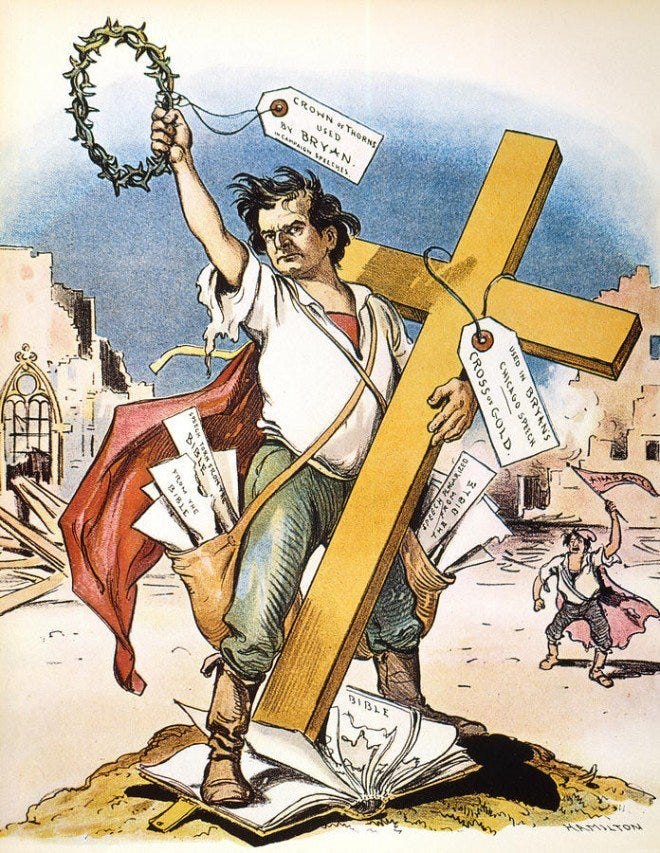
Cross of Gold

        William Jennings Bryan delivered this speech in the hopes of advocating economic bimetallism. He believed that one amount of gold and a different amount of silver should be equal to another and supported the Democrats saying the dollar should be standardized to silver. Therefore, this would help the poor farmers out West and lead to Bryan's economic populism.
Related image
The Sherman Silver Purchase Act was also aimed towards
helping the farmers, as Bryan stated in his speech.

LAD/Blog #25: The Dawes Act

Image result for dawes act
The Dawes Act

           The Dawes Act gave the President the power to split up Native American tribal land and give it to individual people. He was allowed to do this with any reservation land he deemed advantageous for farming and permitted the government to sell Native American land to American settlers. Also, the government was allowed to build railroads, highways, and other infrastructures through the reservation land. Plus, it increased the amount of assimilation of Native Americans into American culture.
Image result for homestead act
The Homestead Act of 1862 also divided up land
in the West to those seeking to farm. It permitted
the government to have control of the land
and American settlers in the West.

LAD/Blog #24: Populist Party Platform

Image result for populist party
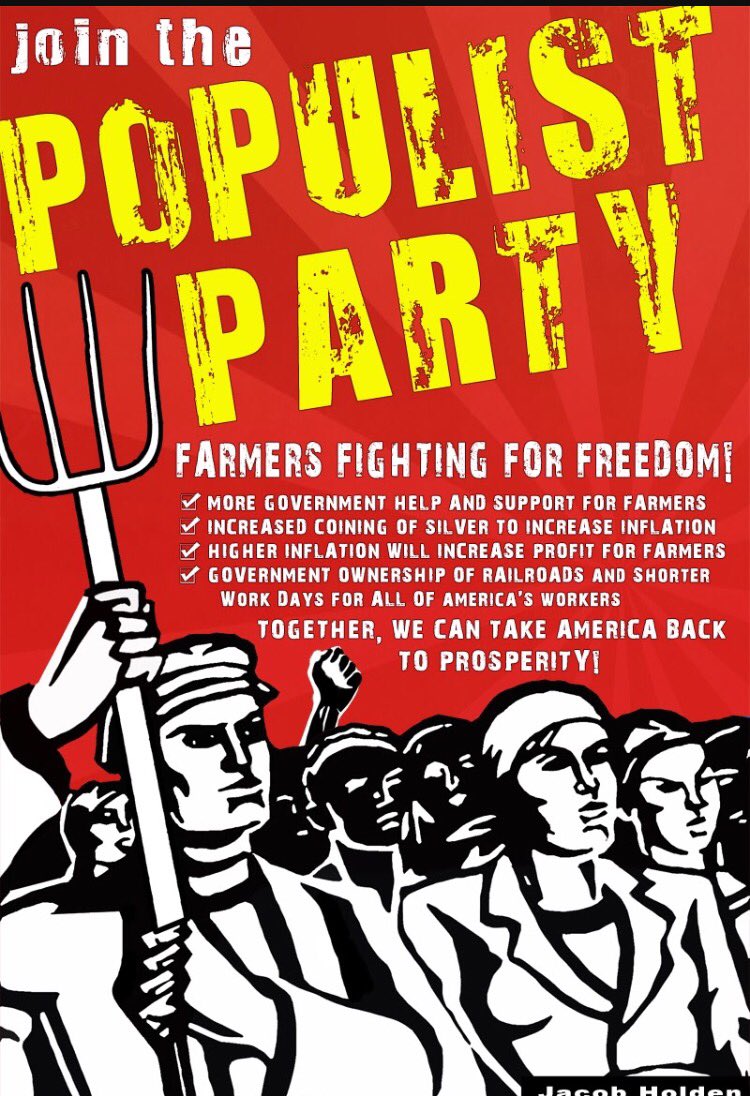
Populist Party campaign poster

          The Populist Party originally based their beliefs off opposing big businesses and all they stand for. Some of the first members included in the party were farmers who believed in unions and the basic rights of people for all workers. They were supporters of increased government control, and made sure all the railroads were controlled by the government. The Populist Party leaned in support of the people and their rights, going against corruption in business.
Related image
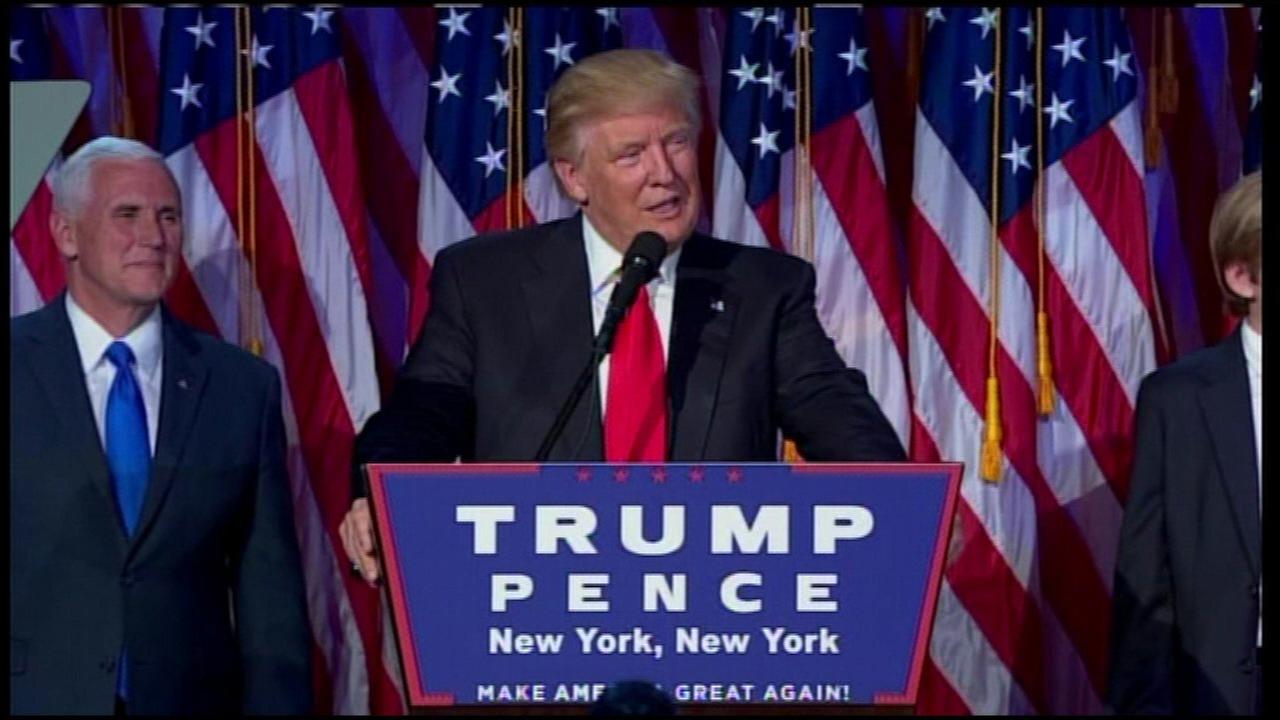
In Trump's 2016 election, he campaigned with speech
that made him seem like the common man. He put into
the minds of United States citizens that he was just another
ordinary person that would represent them and make
sure all their rights were being protected.

Tuesday, December 18, 2018

LAD/Blog #23: McKinley's War Message

Image result for mckinley's war message
McKinley's War Message

           McKinley eventually changed his mind towards neutrality in the Cuba v Spain war. He believed it was the United States' obligation to protect Cuba under the Monroe Doctrine and soon joined the fray. Besides protecting Cuban interests, McKinley thought that he had American interests at heart. He thought the war was hurting international trade and commerce between the United States and Cuba. The war proved to be a danger to American peace, and an expensive one at that.
Image result for woodrow wilson's war message
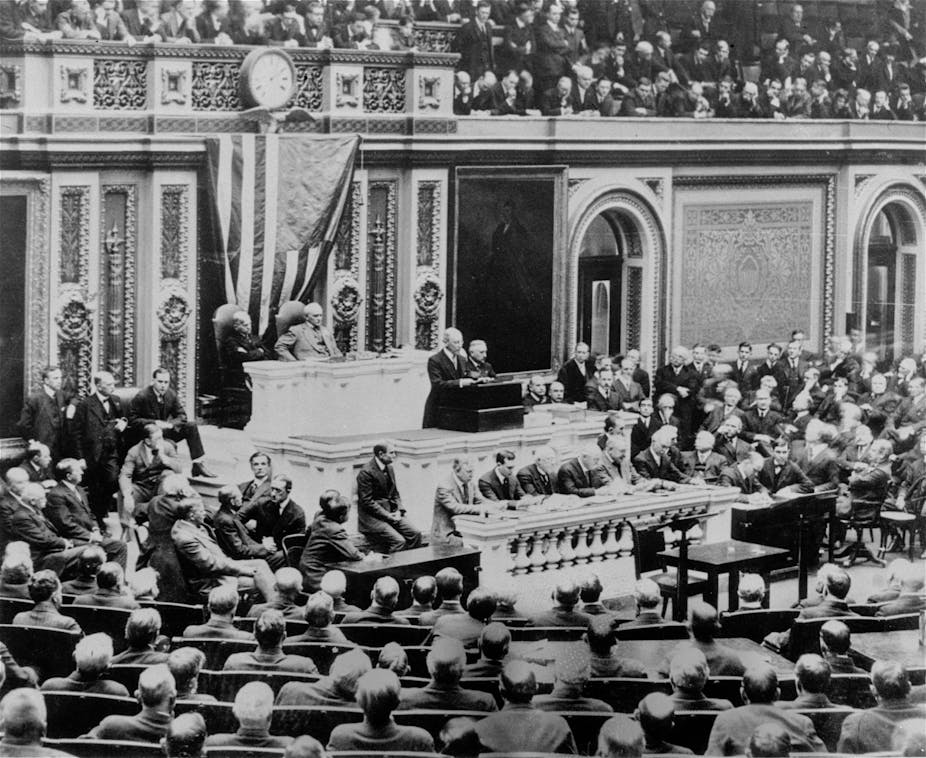
Woodrow Wilson's war message asking Congress
to declare war on Germany was similar to McKinley's
as he felt it was right to protect other countries, and most
of all, the welfare of the United States.

LAD/Blog #39: Brown v Board of Education

Linda Brown The 1954 Supreme Court case, Brown v Board of Education , the Supreme Court ruled that segregating schools was unconst...